Health Workers Warn: “One Ambulance Is Not Enough For This Catchment Area”
By Richmond B. Tholley| Regional Correspondent, Northeast
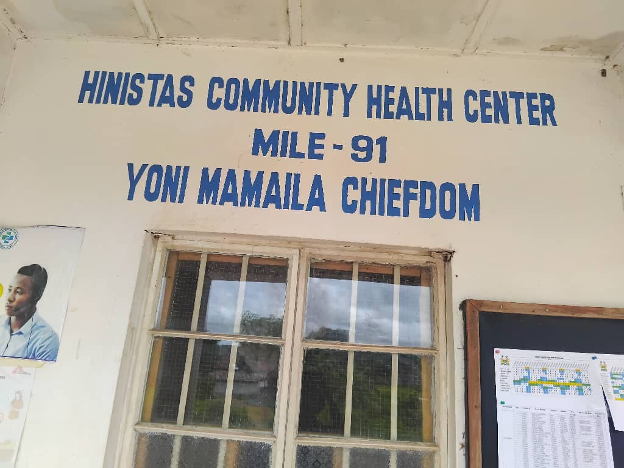
A 13-month-old boy from Mayorgbor village, Yoni Mamaila Chiefdom died yesterday at Hinistas Hospital, Mile 91, after a delay in referral caused by the unavailability of an ambulance.
The incident has reignited concerns over emergency medical services in Mile 91, a major commercial junction serving thousands across Tonkolili and neighbouring districts.
WHAT HAPPENED
According to a health worker at the facility who spoke on condition of anonymity:
The boy was referred from the Health Centre in Mayorgbor village and brought to the pediatric ward with severe fast breathing and other serious symptoms. The clinical team conducted a full assessment, commenced treatment, and placed the child on oxygen while under close observation.
After several hours, the attending team determined that the boy required urgent referral for advanced investigation and care at either Magburaka Government Hospital or Moyamba.
However, at the time the referral decision was made, Hinistas Hospital’s only ambulance was out of station. It had earlier transported another patient to Magburaka.
The child could not be transferred. The ambulance returned to the hospital between 3:00 PM and 4:00 PM. By the time preparations were made to move, the 13-month-old boy had passed away.
THE SYSTEMIC GAP: SINGLE-POINT FAILURE
Hinistas Hospital currently operates with one ambulance to serve Mile 91 and surrounding communities, and hospital sources say the vehicle is not in good working condition.
Health systems experts describe this as a single-point failure — where the absence of one asset shuts down an entire emergency pathway.
Technical implications:
1. No Redundancy: With one vehicle, concurrent emergencies cannot be managed. If the ambulance is on referral, the hospital has zero capacity for new emergencies, including obstetric complications, trauma, and acute pediatric cases.
2. Violation of the Golden Hour: In emergency medicine, timely transfer within the first hour significantly improves survival. Delays directly increase morbidity and mortality.
3. Catchment Overload: Mile 91 is a transit hub on the Freetown-Bo highway. The hospital’s catchment far exceeds the capacity of a single ambulance for 24/7 operations.
Hospital sources disclosed that this is not the first time the facility has faced ambulance challenges in recent weeks, leaving the community vulnerable during emergencies.
A source at the hospital is appealing to authorities to intervene urgently:
> “We are appealing for immediate attention to this issue. We believe advocacy for the provision of at least one additional ambulance for Hinistas Hospital will save lives and strengthen healthcare delivery for the people of Mile 91 and surrounding communities.”
CALL TO ACTION
Health workers and community members are calling on:
1. The Ministry of Health
2. DHMT Tonkolili
3. Members of Parliament representing Tonkolili District
4. Development Partners and NGOs
To immediately deploy at least one additional ambulance to Hinistas Hospital and provide a dedicated budget line for fuel, maintenance, and staffing to ensure 24-hour functionality.
A hospital can have drugs, oxygen, and trained staff. But without transport, it cannot complete the chain of survival.
Yesterday, it was a 13-month-old boy from Mayorgbor, Yoni Mamaila Chiefdom. Tomorrow it could be a mother in labour, a road accident victim, or any resident of Mile 91.
One more ambulance is not a luxury. It is a lifeline.
The hospital management has not commented on the incident at press time. This is a developing story.